
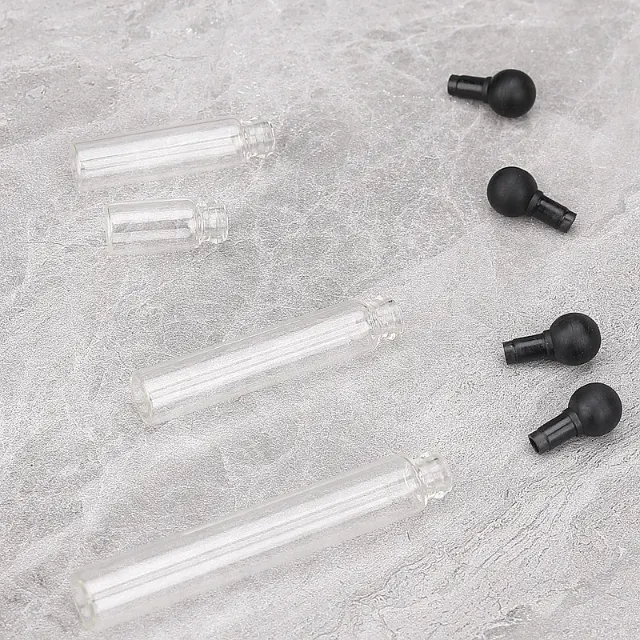
When you start working with perfume decant bottles, size is the first big choice that can trip you up. Three milliliters looks small on paper, five milliliters feels safe, eight milliliters sounds like a travel bottle. In real projects, each size pulls the line in a different direction. It changes how long a customer can live with a scent, how much each campaign costs, and how much risk you carry in stock. If you treat all decant bottles the same, you either waste liquid or cut trials too short.
This guide goes through what a decant bottle truly is. It shows how 3ml, 5ml, and 8ml sizes act in real use. And it tells how you can fit each size to the task you need.
What Is a Perfume Decant Bottle?
Before you choose a amount, you need to know the job of a perfume decant bottle. It sits between a small sample vial and a full shop bottle. It is not just a little bottle. It is a way to shift liquid from one kind to another. And it still looks done and safe to use.
How Decant Bottles Differ From Sample Vials and Retail Bottles
Sample vials are usually thin glass tubes used for first touch. They hold very small bits. And they often seem throw away. Retail bottles are the end item. They are made for racks and long use. They have thicker glass and decor.
A decant bottle sits in the center. It is built to be filled again or filled from a bigger source. Then it is used as a work size. You see it in smell shares. Or in box services. Or in special houses that do not want to send big bottles. And in trip sets. The look needs to be neat enough for a paying buyer. But the cost and build still need to fit for often filling.
Common Uses Of Decant Bottles In Modern Fragrance Distribution
In practice, decant bottles appear in several plain ways. Small makers use them to share rare smells without selling full bottles. Web groups use them for shares and trades. Box services send a set amount each month. So buyers can test many smells without making a huge group. Shops use decants to start interest in new lines before they put in deep stuff.
In all these cases, the size of the decant bottle sets the beat. It sets how long the smell stays in a bag. It sets how often someone grabs it. And it sets how quick they return for more.
Why Size Matters When You Choose a Decant Bottle
Size is not only a question of how much stuff fits inside. It is a tool that controls test length. It controls cost per user. And it even controls how people think about the item.
How Size Affects Experience, Cost, and Testing Depth
A very small decant feels like a brief try. It pushes the user to make a fast choice. A bigger one turns into a small daily habit. And it gives more time for the smell to sit on the skin. On your side, each extra bit raises liquid cost. It raises filling time. And it raises send weight. If you send lots of units, this is not a tiny point.
The right size gives enough days of wear to get a fair view. But not so much that people never grab the full bottle. That even point is different for each job. This is why 3ml, 5ml, and 8ml all have their spot.
Decant Bottle Size Guide: 3ml vs 5ml vs 8ml
Once you think in terms of job to be done, the three main sizes line up more clear. Each one has a best fit use case. And you can make a simple rule group around them.
3ml Decant Bottles: Best for Sampling and Short Trials
A 3ml decant bottle is your best pal when you want true testing without filling the group with free liquid. Most users can get a week of light wear out of 3ml. They can get even longer if they spray soft. That is enough time to test a smell at work. Or on free days. And in different air. This makes thoughts back much more handy than a one day strip test.
For makers that want a bit longer test window, choices like perfume sample vials in 5ml and 10ml sizes can sit next to 3ml decants. They fill the gap between quick tests and trip use. You can keep 3ml as the main size for reach out. Then move certain groups to bigger kinds without changing the whole line.
5ml Decant Bottles: the “Mini Daily Use” Size
Five milliliters feels less like a test and more like a small bottle. When someone likes a smell but does not want or cannot buy the full shop size yet, a 5ml decant gives them a good stretch of daily wear. It often covers one to two weeks of normal use. It covers longer for people who switch several smells.
This size works good for indie and special jobs where each bit is dear. But you still want the user to feel they have something true in their hand. It also fits gift sets and group deals. There, several 5ml decants stand in for one or two big bottles.
8ml Decant Bottles: Travel and Refill Favorite
Eight milliliters is where a decant bottle starts to act like a trip sized bottle. This is the amount many box services send each month. And for good cause. With 8ml, most users can stay with a smell for several weeks. But they still feel free to go to the next one.
Trip and go to work habits also fit this size. It is big enough that people do not worry about running out on a short go. But it is small enough to stay within hand bag rules. And hotel safe size limits. Many smell sets use small travel-size glass perfume containers around this volume. So the hand feel and spray effect stay close to a normal bottle. While the danger stays low.
When To Choose Each Size
You can turn all of this into a simple choice grid.
- Choose 3ml if the aim is wide testing. Or fast thoughts back. And low liquid danger.
- Choose 5ml if the aim is mini daily use. Or small sets. Or fans who want more time with a smell.
- Choose 8ml if the aim is trip. Or box style supply. Or a bridge between decant and full bottle.
As long as you fit the size to the step of the buyer path, the pick becomes much easier to back.
Cost and MOQ Factors You Should Think About
Size also links straight to cost and least order amounts. It is easy to look at unit prices. And forget what you pay per person touched.
Cost Per Milliliter vs Cost Per Customer
A 3ml decant may cost more per bit than a 50ml bottle when you look only at numbers. But you are not filling decants to store liquid. You are filling them to put smell on skin. What counts is the cost per person who tries the smell with enough depth to give a true answer.
For testing, that often makes 3ml and 5ml kinds more smart than jumping to full bottles. Even if your per bit cost looks higher. You can always grow up once you see come back orders.
Typical MOQ for 3ml, 5ml, 8ml Decant Bottles
Sellers often group decant bottles by build. Glass inners and metal covers for 8ml trip kinds may have higher leasts than simple 3ml tubes. This is true mainly once you bring in own colors. Or printing. Or special spray heads. It helps to line planned amounts with real least ranges from the start. So you do not build a idea that your money cannot hold.
How Brands Move From Decant Bottles to Full Retail Packaging
A usual slip is to see decants and bottles as apart worlds. In practice, decant bottles are often a first step. You start with decants to test notes. Or names. And price points. Then you move the winners into higher amount bottle kinds for shop or direct sales.
When you plan that path from the begin, you can use the full range of perfume packaging options to build a group look. Glass color, spray feel, and wide styling stay the same from 3ml or 5ml decants to 30ml or 50ml bottles. That way a buyer who first meets your smell in a decant does not feel like they are buying a different item when they move up to the main line.
A Packaging Partner for Multi-Size Decant Bottles
MUB (Yiwu Yujin Import & Export Co., Ltd.) works with smell makers that use decant bottles as part of a true roll out plan. Not just as a one time item. The focus is on handy sizes like 3ml, 5ml, and 8ml. With glass good and spray work kept the same across kinds. That makes it easier to test a smell in small groups. Then grow into larger plans without changing the whole packaging feel.
Instead of seeing decant bottles and shop bottles as apart items, MUB helps both within the same style way. Decant bottles can share like spray action. Or glass color. And finish logic with larger bottles. So a buyer moving from a test size to a full bottle does not feel a picture or touch break. For groups that need bend in size. Or easy leasts. And packaging that grows with the job. This kind of keep on removes a lot of rub during start and grow.
FAQ
Q1: Which decant bottle size should you start with for a new scent?
A: For most new launches, 3ml is a safe starting point because it gives enough wear time for feedback without locking in too much liquid.
Q2: Is 5ml better than 3ml for perfume sampling?
A: It depends on the plan. Use 3ml for wide outreach and 5ml when you expect stronger interest or want people to live with the scent for longer.
Q3: When does it make sense to use an 8ml decant?
A: Eight milliliters works best for travel, subscription programs, and long trials where you want the scent to become part of someone’s daily routine for a few weeks.
Q4: Do you need different spray systems for different decant sizes?
A: Smaller 3ml formats can use compact sprayers, while 5ml and 8ml often benefit from sturdier atomizers, especially if they are meant for travel and frequent use.
Q5: Can you mix 3ml, 5ml, and 8ml in one product line?
A: Yes. Many brands use 3ml for early testing, 5ml for focused sampling or minis, and 8ml for travel or subscription offers, as long as the design language stays consistent.