
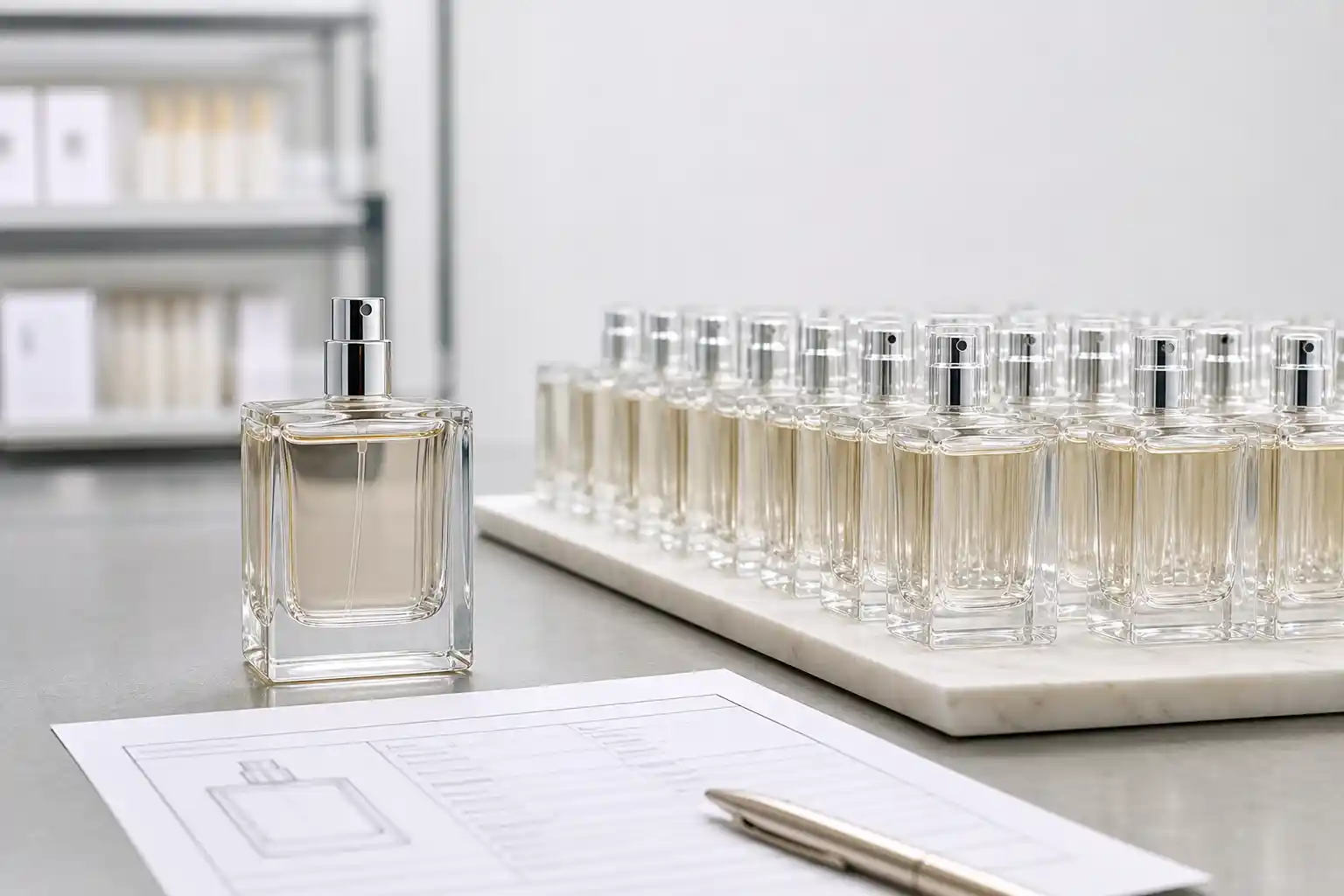
The sample on your desk looks right. The glass is clear, the pump sits straight, and the finish matches the artwork. Eight weeks later, the bulk shipment arrives with a warmer coating, a slightly different cap fit, or cartons that let bottles rub in transit. The supplier may still say the order is within normal production variation. Your launch team is left deciding whether to accept, rework, or delay.
MUB Perfume Bottles works with perfume bottles, including screw and crimp glass formats, and offers customization such as silk-screen printing, gold and silver hot stamping, frosting, color coating, and polishing. These options give brands room to build a distinct pack. They also create more details that buyers need to record before mass production begins.
Why an Approved Sample Can Still Drift in Bulk Production
A sample is a physical reference, but it rarely contains the full instruction set. Bulk production involves glass, decoration, pumps, collars, caps, assembly, and export packing. A change in one layer can alter the finished pack.
The Sample May Represent Appearance, Not the Full Pack
Ask what the sample actually approves. A decorated bottle without the final pump and cap cannot confirm the complete height, cap clearance, or assembled look. A dry sample cannot show how the spray system works with the fragrance formula.
- Mark each sample as an appearance sample, component sample, filled test sample, or final approval sample.
- Record which parts are production-grade and which parts are temporary substitutes.
- Photograph the approved pack from the front, back, side, base, and neck area under neutral light.
Verbal Approval Leaves Too Much Room
Messages such as make it a little darker or use the same cap as last time do not travel well across purchasing, production, and inspection teams. Link every approval to a dated specification version and a named physical sample. When a change is accepted, update both.
Lock the Bottle and Closure as One System
A perfume pack works through interfaces. The bottle neck meets the pump, the pump sits under the collar, and the cap must close without pressing the actuator. Buyers should approve the assembled system rather than four attractive parts in separate bags.
Record the Bottle Details That Affect Assembly
Capacity and shape are only the start. The purchase specification should identify the exact bottle model, neck type, overall dimensions, weight reference, fill level, base profile, and any appearance limits that matter to the brand. For a screw bottle, confirm the matching sprayer and assembly method. For a crimp bottle, confirm the pump and collar as part of the approved set.
Check Pump, Dip Tube, Collar, and Cap Fit
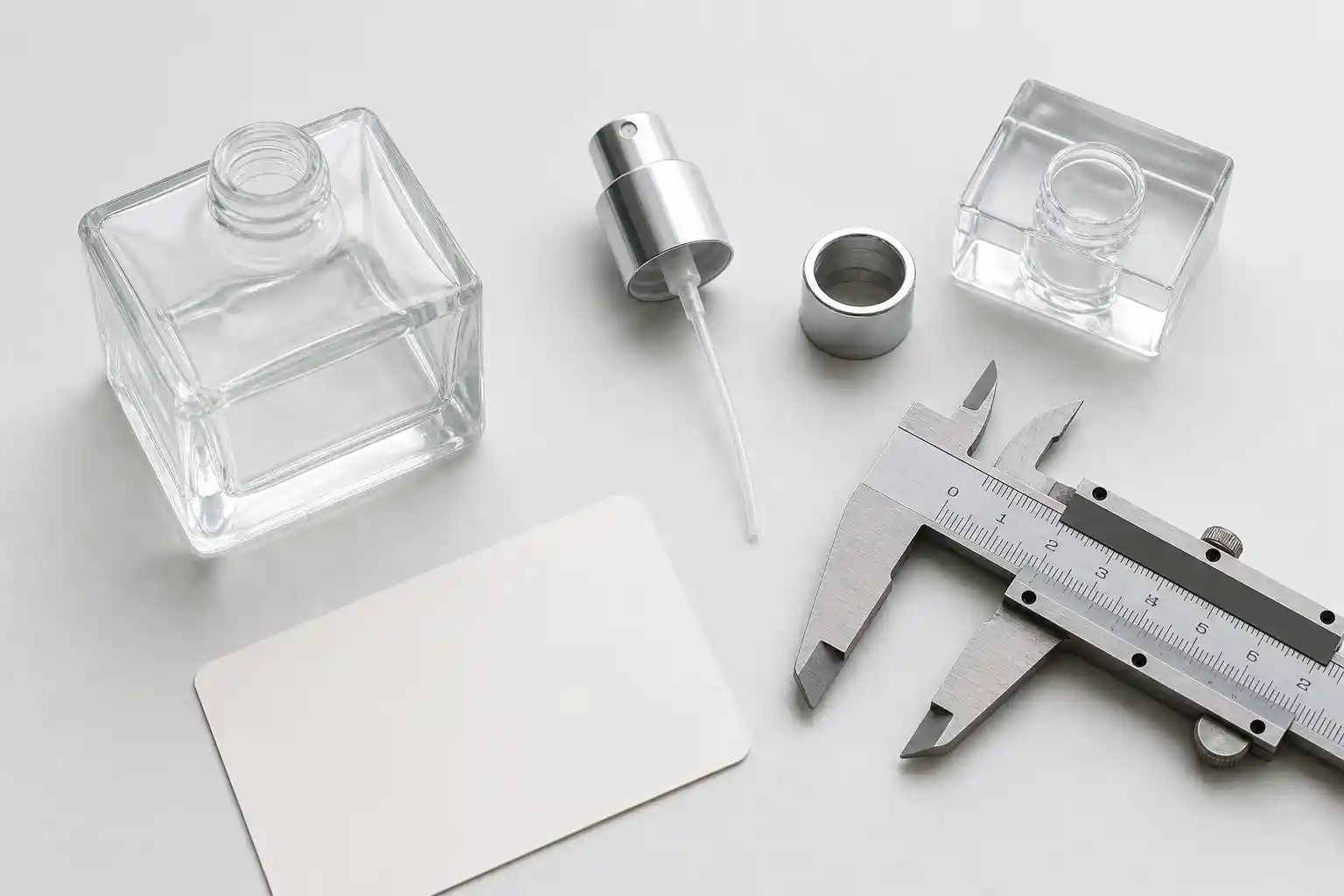
A component check should answer simple questions. Does the pump sit level? Does the dip tube reach the intended corner without an excessive bend? Does the collar cover the closure cleanly? Does the cap engage securely and clear the actuator? Use the actual fragrance for compatibility work whenever possible, because water cannot represent every formula.
Turn Decoration Approval into Measurable Instructions
Color coating, frosting, silk-screen printing, hot stamping, and polishing change how a bottle looks under light and how it handles contact. Keep an approved physical sample, but add written controls that another inspector can follow.
Define Color, Gloss, Coverage, and Logo Position
Specify the viewing conditions and the parts of the bottle used for comparison. Note whether the base, shoulder, neck, and recessed areas receive full coverage. Record logo dimensions and its distance from fixed bottle features. For hot stamping or silk-screen printing, approve registration, edge quality, and the allowed print area.
Approve Packaging Contact Points Too
A clean decoration sample can pick up marks after bottles touch dividers, trays, caps, or each other. Pack finished samples in the proposed inner packaging before the bulk order. The bottle and protective structure need to be reviewed together, especially for coated or frosted surfaces.
Build Production Gates Before the Purchase Order Is Released
A short approval chain prevents late arguments. Each gate should produce a record that purchasing, the supplier, and the inspection team can identify.
Use Four Practical Approval Gates
Keep the sequence short enough that people will use it. A workable plan covers the following points.
- Specification freeze, covering bottle, components, decoration, packing, quantities, and artwork version.
- Final sample approval, with dated photographs and one retained physical sample on each side when practical.
- Pre-production confirmation, covering approved materials, component codes, and any accepted substitutions.
- Pre-shipment inspection, comparing randomly selected packed units with the approved specification and reference sample.
Control Changes Before They Enter Production
Suppliers sometimes need to propose a material, color, component, or packing change. Require a written change request that explains the affected part and gives the buyer a sample or clear evidence for approval. Silence should never count as acceptance.
Inspect the Bulk Order in the Form Customers Will Receive
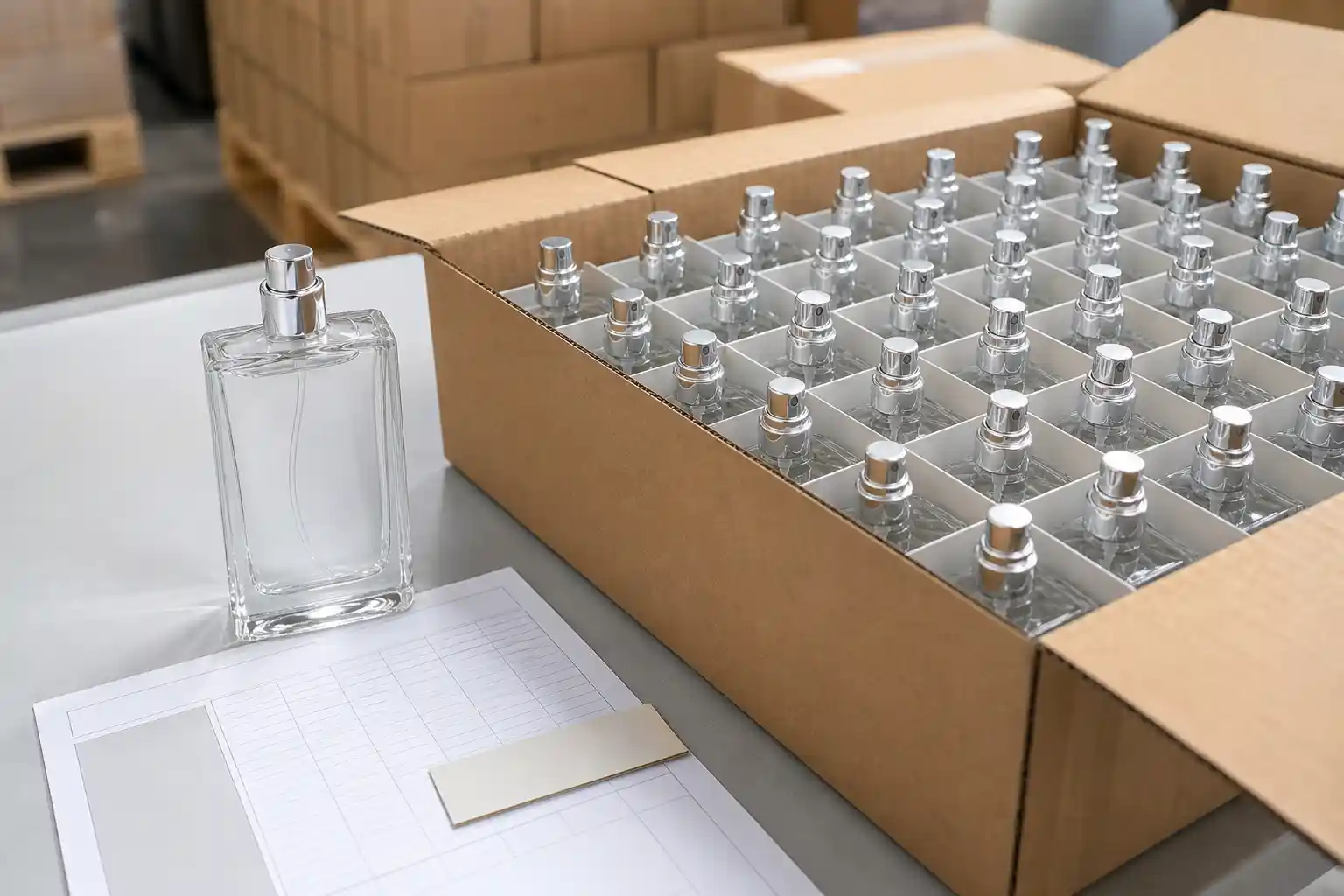
Loose empty bottles can pass a visual check while the packed product still fails. Inspect complete sets and closed cartons. This reveals cap movement, rubbing, missing parts, mixed decoration, and weak separation between glass units.
Compare Function, Appearance, and Packing
The inspection list should cover assembled height, closure fit, spray operation, visible decoration, bottle cleanliness, component count, inner protection, carton marks, and quantity. Set acceptance rules before inspection. A checklist created after defects appear will always favor an argument.
How MUB Perfume Bottles Fits into the Approval Process
MUB Perfume Bottles supplies perfume packaging across glass bottle and atomizer categories and lists screw and crimp bottle options. Its published customization services include silk-screen printing, hot stamping, frosting, color coating, and polishing. Buyers can use this range to coordinate the bottle and finish within one documented project rather than treating decoration as an unrelated afterthought.
For a new order, send MUB Perfume Bottles the bottle reference, intended capacity, closure preference, component requirements, artwork, finish, quantity, target market, and packing needs. Request a final approval sample that reflects the planned combination. That one step gives the quotation, sample, purchase order, and inspection team the same starting point.
Request a Production-Ready Packaging Review
Preparing a new fragrance line or correcting an inconsistent repeat order? Share your approved sample, artwork, component list, and target quantity with MUB Perfume Bottles. Ask the team to identify missing specifications before the bulk order moves forward.
Contact MUB Perfume Bottles for a packaging quotation and sample discussion.
Frequently Asked Questions
Q: Is a physical perfume bottle sample enough for bulk approval?
A: No. Pair it with a dated specification covering components, decoration, packing, and accepted variation.
Q: Should the pump and cap be approved separately?
A: Approve individual parts, then approve the fully assembled bottle as one system.
Q: When should a fragrance brand test decoration?
A: Test it on finished bottles before production and again in the proposed tray or carton.
Q: What should buyers inspect before shipment?
A: Check appearance, assembly, spray function, component count, protection, carton information, and quantity.
Q: How should a supplier substitution be handled?
A: Require written notice, review the affected specification, and approve a new sample before use.