
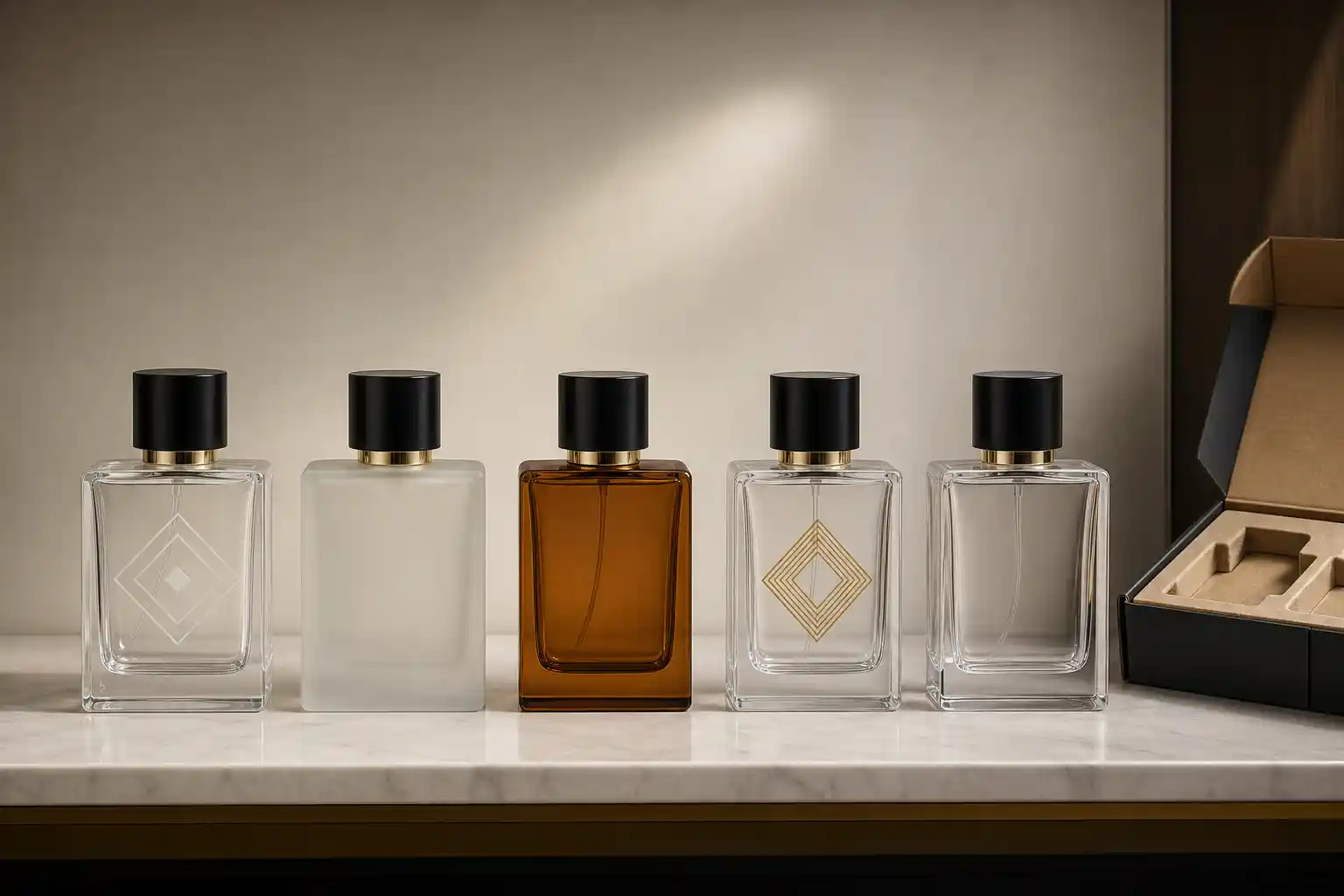
A decorated perfume bottle can look flawless when it leaves the sample room and tired after one week on a tester shelf. Fingerprints cloud the surface. A gold detail rubs against the insert. Two coated bottles touch inside a carton and arrive with visible marks. None of these failures begins with bad taste. They begin when a brand approves a finish under studio light but sells and ships it under very different conditions.
MUB Perfume Bottles offers glass perfume packaging and lists silk-screen printing, gold and silver hot stamping, frosting, color coating, and polishing among its customization services. Each option can support a strong identity. The useful question is how the bottle will be handled after decoration.
Start with the Bottle Journey, Not a Finish Swatch
Map the route from packing table to customer. A department-store tester may be handled hundreds of times. A direct-to-consumer bottle spends more time inside inserts and mailers. A gift set needs clean alignment when the lid opens. These routes place pressure on different areas of the bottle.
Mark Every Contact and Viewing Zone
Identify where fingers grip the bottle, where the cap meets the shoulder, where a tray holds the sidewalls, and where dividers touch during vibration. Then mark the front-facing retail zone. Decoration can be concentrated in visible areas while high-contact zones receive simpler treatment or more clearance.
- Retail shelf, where glare, fingerprints, cap alignment, and repeated handling are visible.
- E-commerce shipping, where inserts, dividers, and vibration can create surface contact.
- Gift sets, where logo position and bottle orientation must stay aligned after transport.
- Travel formats, where the bottle spends more time in bags and receives frequent direct contact.
Match Each Decoration Method to Its Working Conditions
There is no universal premium finish. The same frosted bottle that photographs beautifully may show oils in a tester environment. A polished clear bottle may suit a clean formula-led brand but reveal every fingerprint. Use the finish for the job it needs to do.
Silk-Screen Printing for Controlled, Repeatable Graphics
Silk-screen printing works well for logos, ingredient-led graphics, and limited color artwork on suitable bottle surfaces. It gives the brand a clear focal point without covering the entire glass. Buyers should confirm print location, color reference, edge definition, and clearance from trays or dividers. A small logo placed exactly on a contact point can wear faster than a larger design positioned away from the insert.
Hot Stamping for Focused Metallic Detail
Gold or silver hot stamping can add a bright accent around a logo, line, or small emblem. Retail lighting makes the detail easy to see, which is useful for gift and prestige presentations. Keep stamped areas away from tight packaging contact. Review registration on curved surfaces and test the finished bottle in its insert before approving the order.
Frosting for a Soft, Diffused Surface
Frosting changes the way light moves through clear glass and can reduce the hard glare seen in product photography. It also changes the feel of the surface. Review fingerprints, skin oils, scuff visibility, and the transition around the neck and base. If the bottle sits in a close-fitting tray, inspect the contact zone after a transport trial.
Color Coating for Full-Bottle Identity
Color coating gives stock glass a new visual identity without changing the mold. It can support seasonal ranges, category color coding, or a darker presentation for fragrance liquid that the brand does not want fully exposed. Approve color under controlled light and under the lighting used for photography or retail. Check coverage at edges and recessed areas, then confirm that the packing material does not rub the coated surface.
Polishing for Clarity and Light Control
Polishing supports a clean, reflective glass presentation and can make bottle geometry more visible. Clear polished surfaces suit brands that want customers to see the fragrance color. They also show dust, smears, and uneven lighting quickly. Plan handling gloves during packing, clean protective materials, and realistic product-photo lighting.
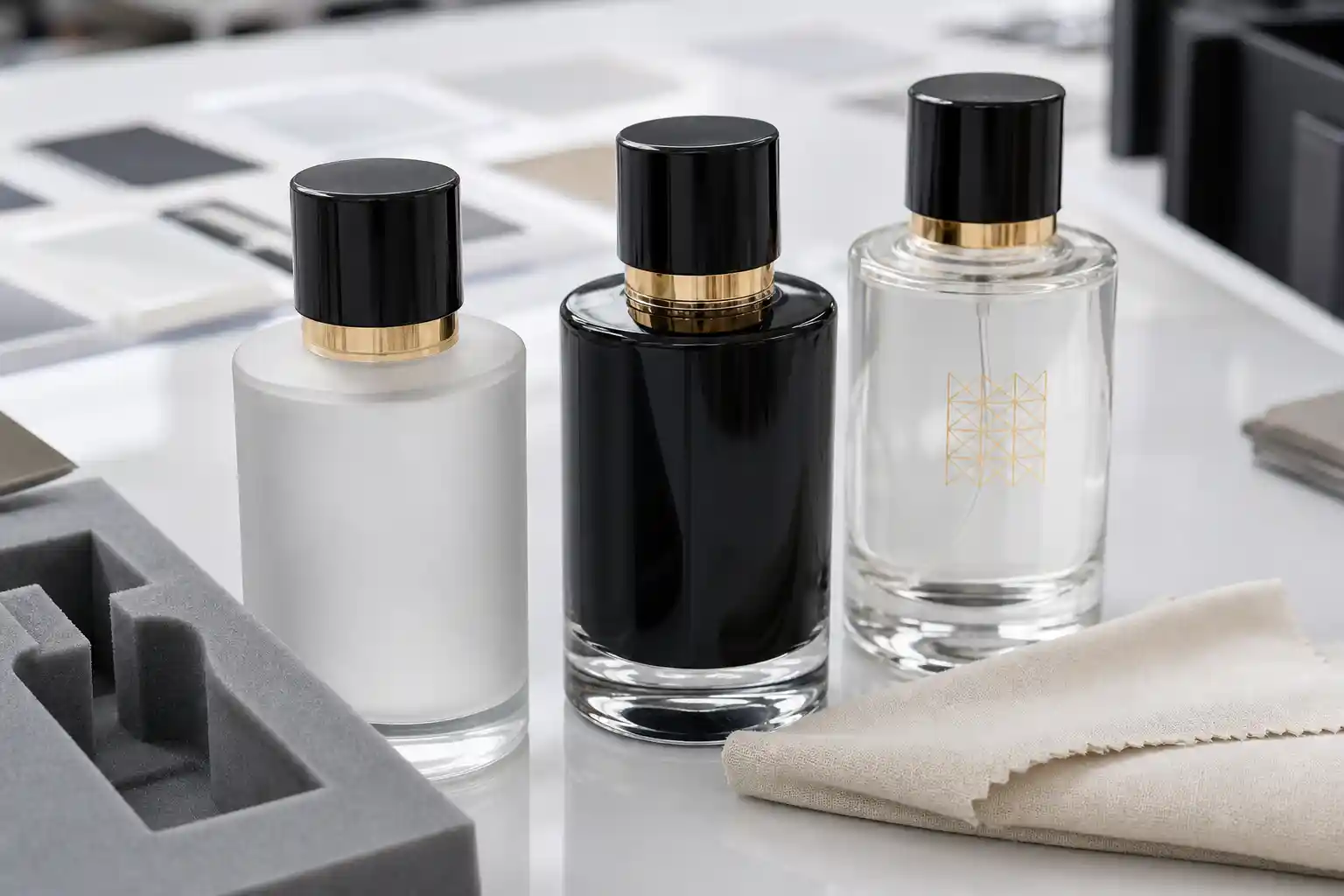
Test the Decorated Bottle as a Packed Product
Decoration approval should include the bottle, closure, and final protective packaging. A test on bare glass misses the rubbing and pressure that occur inside cartons.
Use Actual Inserts and Dividers
Place decorated samples in the proposed tray or divider system. Check that bottles cannot touch each other and that caps do not strike the carton wall. After a transport trial, inspect the same zones under neutral light. Look for gloss changes, scratches, transferred color, print wear, and particles from the insert.
Keep the Bottle Clean Through Assembly
A finish can leave production in good condition and pick up marks during capping, boxing, or final inspection. Define how operators handle the bottle and which cleaning materials are acceptable. Avoid solving every problem with last-minute wiping. Some surfaces become more noticeable after uneven cleaning.
Choose by Sales Channel
The sales channel decides which visual and physical problems matter most. Use a simple channel brief before requesting samples.
Retail Testers and Department Stores
Prioritize grip zones, fingerprint behavior, cap alignment, and easy cleaning. Ask for a sample that staff can handle repeatedly, not a bottle that stays untouched in a display case.
Direct-to-Consumer and Marketplace Orders
Prioritize insert clearance, glass separation, carton movement, and the unboxing view. A finish that arrives clean creates more value than one that only looks impressive in the product-page render.
Gift Sets and Limited Collections
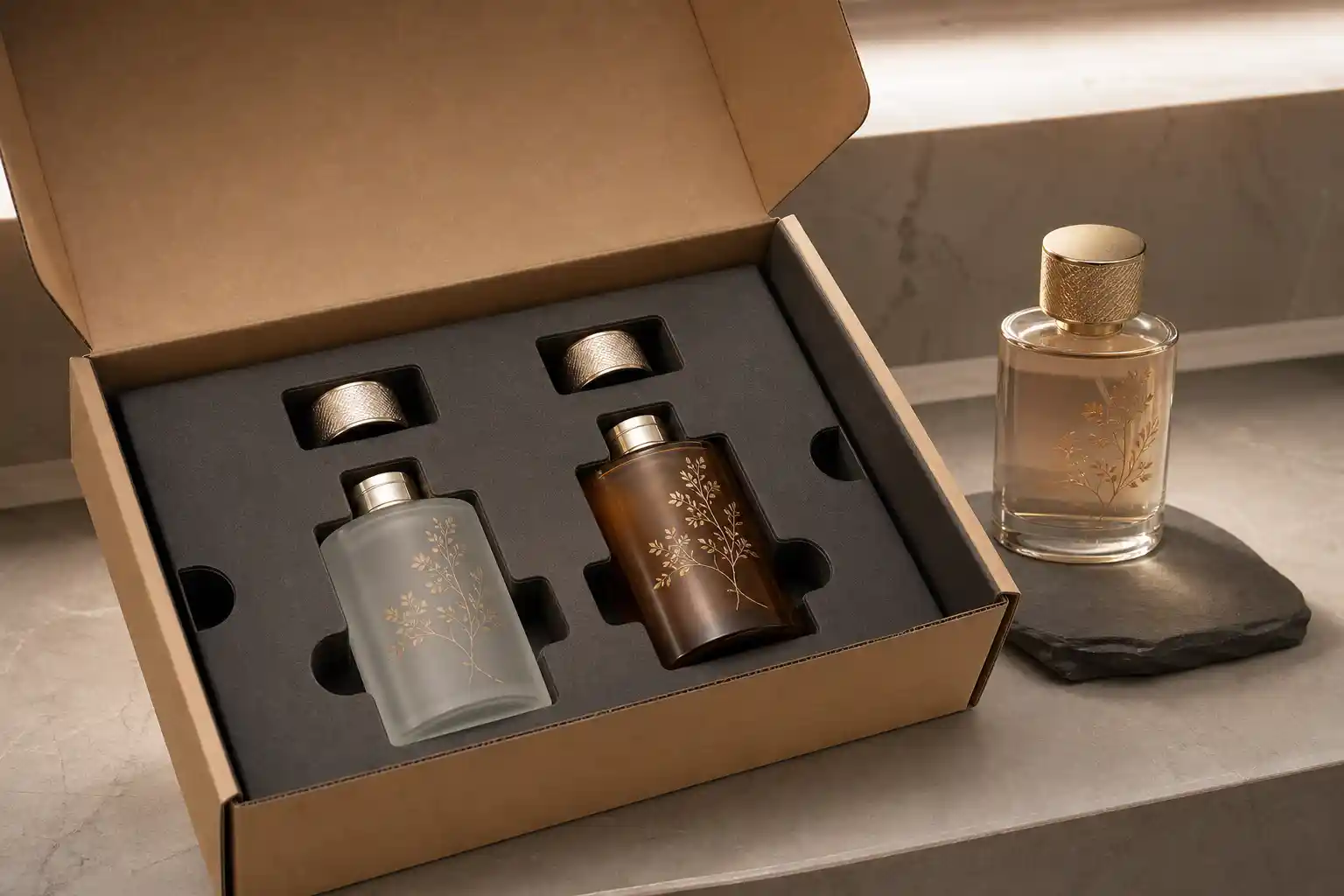
Prioritize artwork registration, consistent orientation, and how metallic or frosted details sit beside the box interior. Build the open-box composition during sampling so the bottle does not rotate or sink during shipping.
How MUB Perfume Bottles Can Support the Selection
MUB Perfume Bottles combines perfume bottle categories with published customization options that include silk-screen printing, hot stamping in gold and silver, frosting, color coating, and polishing. Brands can begin with a screw or crimp glass bottle platform, then request decoration samples aligned with the intended channel and packaging structure.
Send the team your bottle choice, artwork, target color, sales channel, planned insert, order quantity, and reference images. Ask for one assembled, decorated sample and test it under the same handling, lighting, and packing conditions the finished product will face.
Request Decoration Samples for Your Sales Channel
Share your retail or shipping scenario with MUB Perfume Bottles before approving a surface finish. A short discussion about contact zones, artwork placement, and packaging clearance can prevent marks that only appear after the bottles enter real distribution.
Contact MUB Perfume Bottles to discuss bottle and decoration options.
Frequently Asked Questions
Q: Which perfume bottle decoration is best for e-commerce?
A: Choose after testing the finished bottle in its real insert and shipping carton.
Q: Does frosting hide fingerprints?
A: It changes their appearance, but oils and handling marks still need evaluation on a real sample.
Q: Can color coating differentiate a stock bottle?
A: Yes. It changes the bottle identity without requiring a new glass shape.
Q: Where should hot-stamped artwork be placed?
A: Keep important metallic details visible and away from tight tray or divider contact.
Q: What should a decoration sample approval include?
A: Confirm color, coverage, position, edge quality, assembled appearance, and packaging contact performance.