
Choose a dropper for transferring small amounts into a blend or dispensing an oil into the hand. Choose a roller for a finished topical blend applied to a small area. Choose a spray for a product formulated to disperse as a mist.
Those uses provide a starting point for selecting essential oil bottles. The next decision concerns the liquid itself. Pure essential oil, an essential oil diluted in a carrier oil, and a formulated room spray place different demands on the closure. A bottle that looks suitable still needs to work with the finished formula, its intended use, and its storage conditions.
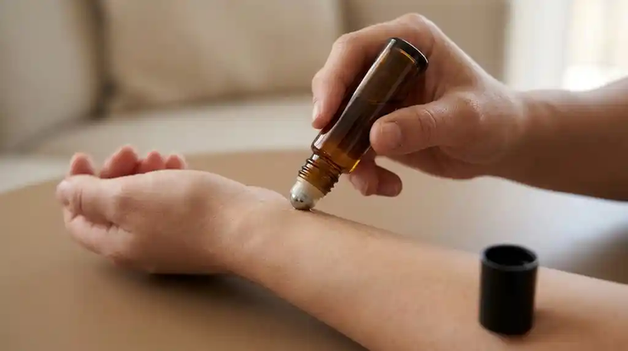
img.Amber glass roller bottle applying a diluted essential oil blend to the forearm.webp
Essential Oil Bottles at a Glance
Application method helps narrow the choice. Use this comparison to identify the format worth sampling before deciding on capacity, shape, or decoration.
|
Selection Factor |
Dropper Bottle |
Roller Bottle |
Spray Bottle |
|---|---|---|---|
|
Typical task |
Transfer liquid or dispense drops |
Apply a topical blend locally |
Distribute a formulated mist |
|
Formula to evaluate |
The actual oil or oil blend |
Finished topical blend |
Finished spray formulation |
|
User control |
Squeezing the bulb and releasing drops |
Rolling over the application area |
Pressing the actuator |
|
Key components |
Pipette, bulb, collar, seal |
Ball, fitment, cap |
Pump, seals, dip tube, actuator |
|
Sample priority |
Pickup, release, component compatibility |
Flow, smooth rotation, cap fit |
Spray pattern, restarting, compatibility |
When reviewing essential oil bottle options, request the complete bottle and closure assembly. The components determine how the user receives the liquid. Bottle shape and color can then be assessed alongside label space and the formula’s light-protection requirements.
Dropper Bottles for Blending and Controlled Transfer
A dropper suits products that users need to transfer before application or add to another preparation. Its usefulness depends on reliable pickup and release, so evaluate the pipette assembly with the intended liquid.
Bulb Droppers and Orifice Reducers
A bulb dropper draws liquid into a pipette when the squeezed bulb is released. The user lifts the assembly from the bottle and squeezes again to dispense it. This format gives access to the liquid for blending or application.
An orifice reducer is an insert in the bottle opening through which liquid passes when the bottle is tipped. Both formats may be described as dispensing drops, but their operation and components differ. Specify which structure you need when requesting a quotation.
Check the Pipette, Bulb, and Actual Output
Para rubber dropper bottles, check pipette length, suction, and release with a filled sample. Repeat the check as the fill level falls. Also assess the bulb and sealing components for changes during contact with the formula, including swelling, hardening, or loss of function.
Treat drop dispensing as a handling feature. A claim about a particular volume per drop requires validation with the chosen liquid and assembly. If a formulation step needs an exact quantity, use an appropriate verified measuring method. Instructions based on an assumed universal number of drops per milliliter can introduce errors.
Roller Bottles for Ready-to-Use Topical Blends
A roller fits a finished product intended for direct application over a small area. The formula must already be suitable for its intended skin use; the roller mechanism provides a way to apply it.
Match Flow to the Finished Blend
The rotating ball carries liquid onto the application surface. Flow depends on how the finished blend behaves within the ball and fitment assembly. A blend that moves poorly may produce a faint or interrupted trace. Excessive flow can leave more liquid than the intended application needs.
Compare filled samples of glass roll-on bottles using the actual product. Check how readily the ball starts turning and how it applies after storage. Assess the result against the intended use, including the amount of rubbing a customer would reasonably expect to do.
Check Skin Contact and Closure Fit
Roll-on use involves contact between the applicator and skin. Include that use pattern in the product’s hygiene assessment and instructions. A glass vial or a particular ball material alone cannot establish the hygiene performance of the finished product.
Check that the fitment stays seated and the cap closes properly after repeated opening. Inspect filled samples for seepage under the orientations expected during handling. Roller output also changes with application technique, so a fixed-dose claim needs its own supporting evaluation.
Spray Bottles for Formulated Mists
A spray bottle suits a product intended to cover an area as a mist. Room, linen, and body sprays have different use requirements. Start with the intended application and the finished formulation when selecting a pump.
Match the Pump to the Formula
Ask the supplier to evaluate the pump with the actual liquid, including its carrier system and flow characteristics. A successful test with water establishes performance with water; your formula needs a separate check.
The evaluation should cover the pump’s internal components as well as the bottle. Ask which materials contact the liquid and how compatibility will be assessed. Specify the intended coverage and application distance so the spray pattern can be judged against a practical requirement.
Bottle selection also leaves formulation work to resolve. Have a qualified formulator assess the finished spray’s stability, suitability for the intended exposure, and any necessary microbial protection. Adding a spray closure does not establish those properties.
Verify Stability and Repeated Spraying
Observe the filled product after standing, then test initial priming and repeated actuation. Look for changes in the liquid’s appearance and in the spray pattern. Check for dribbling, blockage, leakage, and difficulty restarting after storage.
A fine mist during the first demonstration is one observation. Repeat the assessment over the agreed storage and use conditions before approving the assembly. Any shaking instruction should follow the formulation’s validated requirements.
Validate the Filled Package Before Ordering
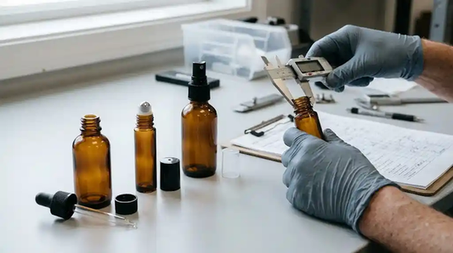
Approve essential oil bottles using filled samples and written acceptance criteria. This connects the packaging decision to the product customers will receive and gives the supplier a clear reference for production.
Use the following checklist when preparing samples and requesting a quotation:
Describe the product. State the intended application, nominal fill, relevant formulation characteristics, and expected storage and transport conditions. Arrange confidential formula sharing when needed for compatibility work.
Define the assembly. Record the bottle neck specification and selected closure components. Confirm the pipette or dip-tube length, roller fitment, and sealing arrangement as applicable.
Agree on functional checks. Define acceptable pickup, application, or spray behavior. Include repeated opening and use, and observe performance as the container empties.
Assess storage and handling. Establish suitable conditions for checking leakage, component changes, and dispensing after storage. Set the duration and conditions with the responsible technical teams.
Approve the decorated sample. Confirm label dimensions and placement on the actual bottle. Check the selected decoration for wear or damage during expected handling and incidental product contact.
Keep an approved sample and record its component specifications. If a component or formula changes, review whether the existing approval still applies. Confirm the quantity, decoration, and packing requirements before comparing quotations; these details affect what each supplier is pricing.
img.Essential oil bottle samples and dispensing components undergoing packaging inspection.webp
Discuss Your Bottle and Closure Requirements
MUBTF offers glass roll-on bottles and rubber dropper bottles, including amber and matte black roll-on options. These provide starting points for comparing formats for an oil-based product. Confirm the selected components and any customization against your project requirements.
To discuss your bottle specifications, prepare the intended application, target capacity, formula information needed for compatibility assessment, and preferred appearance. Ask which samples are available and what remains to be verified before ordering.
FAQ
Q1: Which Roller Bottle Should I Choose for a Diluted Essential Oil Blend?
A: Choose a complete assembly that applies your finished blend at an acceptable rate and seals under expected handling conditions. Evaluate the ball and fitment together. Capacity and appearance help narrow the range, but filled-sample performance should determine approval.
Q2: Can I Put Undiluted Essential Oils in a Spray Bottle?
A: A pump’s ability to move the liquid is only one consideration. Component compatibility and safety for the intended exposure also need assessment. Obtain formulation guidance and test the proposed assembly before choosing this format for an undiluted oil.
Q3: Does a Dropper Dispense the Same Amount Every Time?
A: A standard bulb dropper does not establish a fixed dose by itself. Validate any volume claim using the actual liquid, assembly, and dispensing method. For precise formulation work, use a measuring method appropriate to the required accuracy.
Q4: Can I Switch Between a Dropper, Roller, and Spray Closure on the Same Bottle?
A: Interchangeability requires confirmation of the complete bottle and closure fit. Matching nominal diameter alone is insufficient. Check neck dimensions, sealing surfaces, component lengths, and any fitment requirements, then test each proposed combination with the product.