
Een parfumfles has to do more than look distinctive in a render. The bottle, spray pump, neck, cap, decoration, inner holder, and mailing box need to be reviewed as one product experience. A design that works on a screen can still be awkward to hold, difficult to assemble, unclear to approve, or poorly supported in its shipping pack.
Find these problems before a large order. Ask the relevant teams to review the same physical sample and approval record.
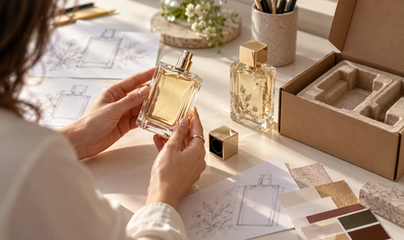
1. Perfume Bottle Design Mistakes That Start With the Brief
Designing for a Render Instead of the Customer
A render can show the silhouette, color, and mood. It cannot show how a person grips the bottle, removes the cap, presses the pump, or returns the cap after use. Add those actions to the brief before the shape is treated as final.
Ask for a short use review: Can the bottle be picked up securely with dry or lightly moisturized hands? Is the spray direction obvious? Can the cap be removed without twisting the entire bottle? Does the bottle stand naturally on the intended shelf? These are review questions, not universal pass or fail rules. Record the answers for the intended user and product context.
Leaving Size and Product Requirements Undefined
“Make it elegant” is not enough for a supplier handoff. The brief should identify the intended fill volume, approximate overall size, label area, cap or overcap concept, filling approach, and the way the product will be displayed and mailed. If any of those decisions are still open, mark them as open instead of allowing each team to make a different assumption.
A clear brief also gives the supplier a reason for each constraint. For example, a tall silhouette may be selected for shelf presence, while the mailer may require additional support. When the reason is visible, later changes are easier to evaluate without losing the design intent.
2. Choosing a Bottle Shape Without Checking Use and Production
Ignoring Grip, Stability, and Cap Removal
A striking outline is only one part of a usable perfume bottle. Review the base, center of gravity, shoulder transitions, and the space needed to grasp the bottle. Check whether the cap can be removed while the bottle stays stable, and how the label reads in its intended shelf context.
Shipping adds another constraint. A bottle that looks right on a shop shelf may need different support in the mailing pack. A tall bottle needs support to stay upright, while a square bottle may need a holder that protects its corners. Treat the holder and box as part of the shape decision, rather than designing them after the bottle is approved.
Locking the Shape Before Reviewing Filling and Assembly
Before the outline is frozen, bring the filling and assembly teams into the review. Confirm where the filling equipment needs access, how the pump and collar will be fitted, and whether the cap can be assembled without damaging the decoration. The goal is to make sure the selected form can be discussed with the people who will fill, assemble, pack, and inspect it.
For a custom perfume bottle, ask the supplier to show which dimensions are design decisions, which are interface decisions, and which remain subject to sample confirmation. Keep those questions with the approved drawing so a late visual change does not silently alter assembly requirements.
3. Specifying the Pump and Closure Too Late
Treating the Bottle, Pump, and Cap as Separate Purchases
The bottle, top, cap, holder, and mailing box should be selected as a coordinated set. A closure that looks attractive beside a bottle may still create a poor fit, awkward use, or an unstable assembled pack. Review the assembled sample, not only separate component photos.
The leakage-risk review should include the pump fit, neck size, cap fit, and movement inside the box. Small mismatches can create trouble: a loose pump, a poor neck match, a weak cap fit, or too much movement during shipping. These are checkpoints to resolve with the relevant supplier; they are not a claim that one component is always the cause of leakage.
Approving Appearance Without Reviewing the Assembled Pack
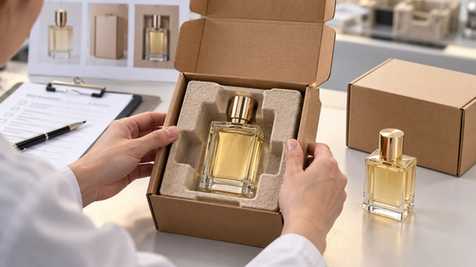
A component approval is incomplete until the full pack has been assembled. Check the bottle with the pump, collar, cap, holder, and outer box. Operate the pump, replace the cap, inspect contact points, and look for movement when the pack is handled as it will be mailed.
Have one owner record the assembled configuration. Include the component names, drawing or sample reference, decoration version, packing method, and unresolved questions. This prevents procurement from approving one cap, production from using another, and packaging from working from a third photo.
4. Approving Decoration Only From Digital Artwork
Skipping Physical Color and Placement Samples
Artwork proves the layout; it does not prove how the decoration reads on the actual glass shape. Review color, scale, registration, label clearance, and visual balance on a decorated physical sample. Check the bottle under the lighting used for approval and beside the cap and secondary packaging.
If the bottle has curves or recessed areas, ask how the artwork will be positioned. Mark the approved viewing side and reference orientation.
Leaving Label Space and Decoration Requirements Until the End
Reserve label and decoration areas while the bottle is still being designed. Confirm where mandatory product information, brand marks, batch information, and visual accents may sit for the intended market. Moving it later may change the bottle balance or handling.
For painted decoration, review the supplier’s perfume bottle surface-finishing guidance and agree how adhesion will be checked. A cross-hatch adhesion check is one example described in the supplied packaging guidance; it should be treated as a review method to agree, not as a universal legal or industry limit. Record the agreed method, sample, and decision with the decoration approval.
5. Skipping Tests With the Actual Product and Shipping Pack
Reviewing Empty Samples Without a Filled-Pack Evaluation
An empty bottle can hide issues caused by the formula, fill level, pump, dip tube, or assembled weight. Before a large order, request real samples and fill them with the intended product or an agreed representative material. Operate the pump, replace the cap, lay the pack on its side where relevant, and inspect the complete set after handling.
The supplied guidance recommends reviewing the bottle, pump, collar, cap, holder, and outside box together rather than relying on photos. Use that principle to define a sample plan with the brand and supplier. Name who supplies the filled sample, checks the user experience, and records concerns.
Testing the Bottle Without Its Final Protective Packaging
A bottle test without its intended holder and mailer does not answer the shipping question. Pack the filled bottle exactly as planned, including the inner support and outside box. Review movement, orientation, contact points, and the condition of the decoration after the agreed handling sequence.
Do not invent a pass limit just to make the checklist look precise. The brand and supplier should agree on the handling sequence, observations, evidence, and decision owner. If the pack changes, repeat the review against the new configuration.
6. Moving to Production Without a Shared Approval Checklist
The final mistake is allowing design, procurement, and production to use different definitions of “approved.” A shared checklist should connect the physical sample to the drawing, decoration file, assembly plan, packing method, and change record.
|
Check object |
Brand confirms |
Supplier confirms |
Goedkeuringsbewijs |
|---|---|---|---|
|
Bottle shape and use |
Grip, stability, cap removal, shelf context |
Feasible assembly and sample version |
Signed sample or annotated photos |
|
Pump, neck, cap, and holder |
Fit, operation, movement, and pack interaction |
Component references and assembled configuration |
Assembled sample record |
|
Decoratie |
Color, placement, label area, agreed adhesion review |
Decoration version and inspection method |
Approved decorated sample |
|
Filled shipping pack |
Intended fill, holder, mailer, and handling plan |
Packing method and sample availability |
Filled-pack review record |
|
Changes before production |
Who may approve a revision |
How the revision is identified |
Updated drawing, file, and change log |
Record the Approved Sample, Drawing, and Decoration Version
Give every approved item a clear identifier. Save the sample reference, drawing revision, decoration artwork, component list, packing method, and approval date together. If the supplier proposes a substitute pump, cap, or holder, pause the release until the assembled pack is reviewed again.
Agree on Inspection Criteria and Change Control
Write down what will be inspected, by whom, and against which reference. Include the agreed decoration review, filled-pack review, and shipping-pack configuration. A change-control note can be short, but it should show what changed, why it changed, and who accepted the new version.
7. Questions to Resolve Before Ordering Custom Perfume Bottles
What Should a Brand Review Before Approving a Bottle Sample?
Review the complete set: bottle, pump, collar, cap, holder, and mailing box. Use a filled sample where possible, handle it as intended, and record fit, movement, decoration, and open questions. The approval should identify the exact sample and the version of every related file.
When Should the Spray Pump and Closure Be Selected?
Select them early enough to review the assembled pack before the bottle shape and decoration are frozen. Confirm pump fit, neck interface, cap fit, operation, and movement in the holder and mailer. If any component changes, repeat the relevant assembled-pack review.
Should a Brand Choose a Stock Bottle or a Custom Mold?
Start with the brief rather than the label “stock” or “custom.” Compare both routes against the same questions: intended use, fill and size requirements, decoration area, filling and assembly needs, sample plan, shipping support, change control, and total approval workload. Ask suppliers to document assumptions so the decision can be revisited without losing the original design intent. You can also review MUB’s perfume packaging news for related packaging topics.
A strong perfume bottle process ends with a shared, physical reference. Before production, review the assembled bottle, the filled product, the decoration, and the final protective pack together. For project-specific questions, use MUB’s contact page to start a supplier discussion. That small discipline gives every team the same basis for a clear approval decision.